
Why Choosing Your First Equipment Wisely Matters
Starting in beekeeping is exciting, but buying the wrong equipment — or buying piece by piece without a plan — is one of the most common reasons beginners give up in their first year. In the Dominican Republic's tropical climate, where colonies produce almost year-round, having the right equipment from the start makes the difference between a hive that thrives and one that is lost within a few months.
This guide covers the essential equipment every beginner beekeeper needs, organized by priority.
1. The Hive: The Heart of Your Apiary
Everything starts with the hive. In the Caribbean, the 10-frame Langstroth system is the recommended standard — its modular design makes management, inspection, and expansion easy as your colony grows.
A quality hive, built with wood treated to resist tropical humidity, will save you from moisture and pest problems that are common with low-quality equipment.
2. Personal Protective Equipment
A full beekeeping suit — with an integrated veil, leather or nitrile gloves, and tall boots — may be optional for some experienced beekeepers, but it is absolutely essential when you are starting out. Stings are not just painful: they can make you nervous during inspections, right when you need to stay calm and methodical.
Invest in quality protection from day one. It is cheaper to replace a suit in a year than to learn to handle bees while constantly afraid of getting stung.
3. Basic Handling Tools
Two small tools make a huge difference:
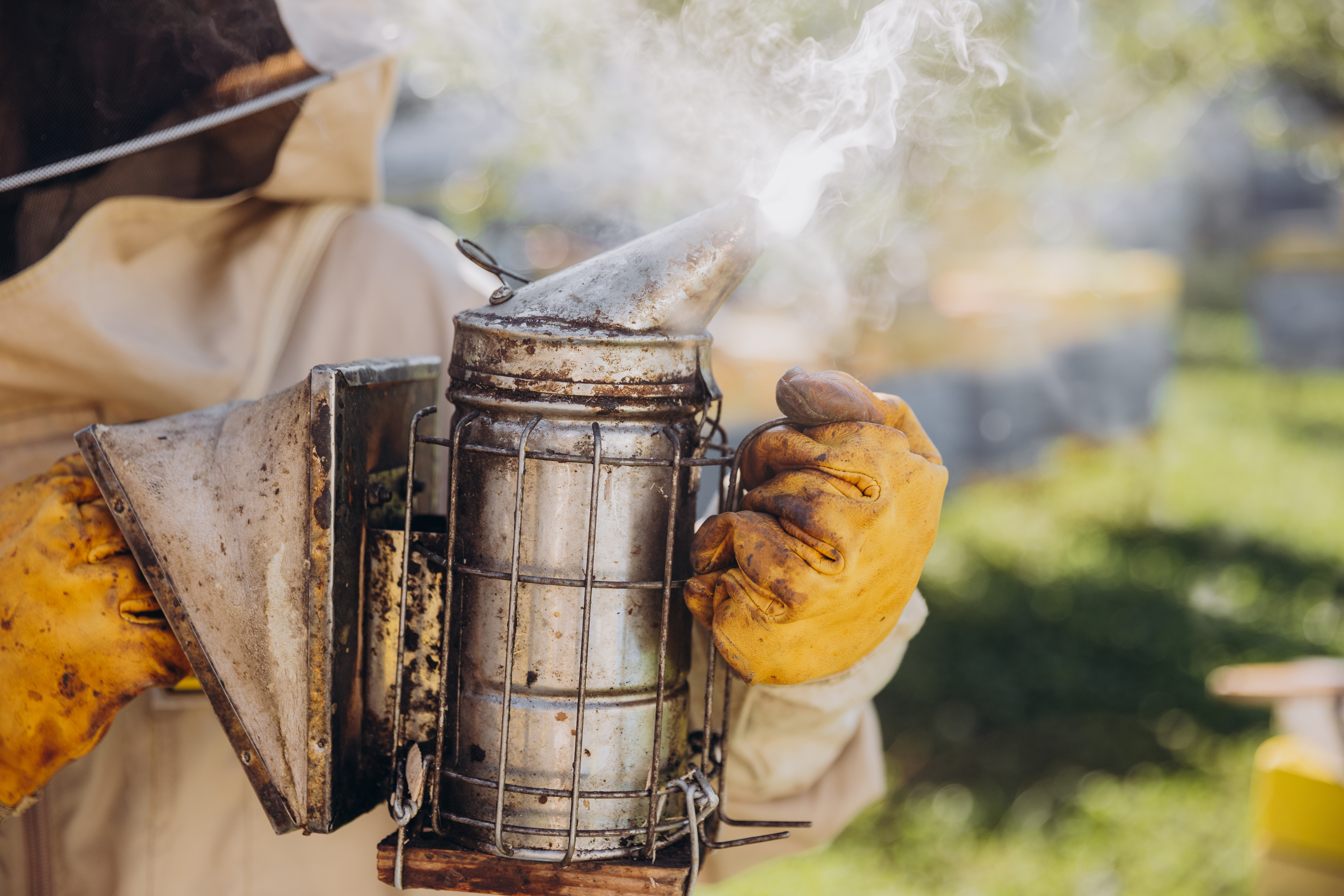
- Smoker: calms the bees during inspections, reducing stress for both you and the colony.
- Hive tool: essential for separating frames and boxes that bees seal with propolis — without it, every inspection becomes a struggle.
4. The Queen Excluder
As your colony grows, you will want to separate the brood chamber (where the queen lives and lays eggs) from the honey supers where you will harvest surplus honey. That is where the queen excluder comes in.
It is not essential on day one, but it is one of the first purchases most beekeepers make in their first year, as soon as the colony starts producing surplus honey.
5. Colony Nutrition and Health
In the first months, especially if you are starting with a nuc or package of bees, a feeder helps support the colony while it builds up its reserves. Combined with regular varroa monitoring — a parasite present year-round in tropical climates with no winter to interrupt its cycle — this rounds out the basic health toolkit.
Start With the Essentials, Grow With Confidence
You do not need to buy the entire catalog on day one. Start with a quality hive, your protective gear, and the basic tools. Everything else — excluders, feeders, extraction equipment — you add as your operation grows.
Have questions about what equipment fits your specific situation? Message us on WhatsApp — with 30 years of tropical beekeeping experience, we will help you set up the right apiary from day one.
0 Comments